
Ocean Drive (A1A) runs along the beach in Hallandale Beach, ZIP code 33009. The city's history says motels such as the Dakar, the Flamingo and the Gates Riviera opened on Ocean Drive in the 1950s. The city's adopted plan describes the beach area as almost entirely condominiums and high-rise apartments.
In a tall building, a plumbing problem rarely stays in one unit. This page explains how responsibility is usually divided, what to do in the first minutes of a leak, and how a plumber can help you document a problem so your association can act on it.
Why a high-rise leak is different
Pipes and drains in a condominium building run up and down through shared walls, shafts and ceilings. A leak in one unit can travel to the ones below, and a clog in a shared stack can show up in several units at once.
That is why the first questions on most calls are whose pipe it is and who else is affected. The documents that govern your building decide where the association's responsibility ends and yours begins, so keep a copy handy.
What belongs to the unit owner
In many condominiums the plumbing inside your unit, such as fixtures, supply lines to them and a water heater that serves only your unit, is the owner's responsibility. Your building's declaration is the authority, not a general rule, so check it or ask management.
What a plumber can document
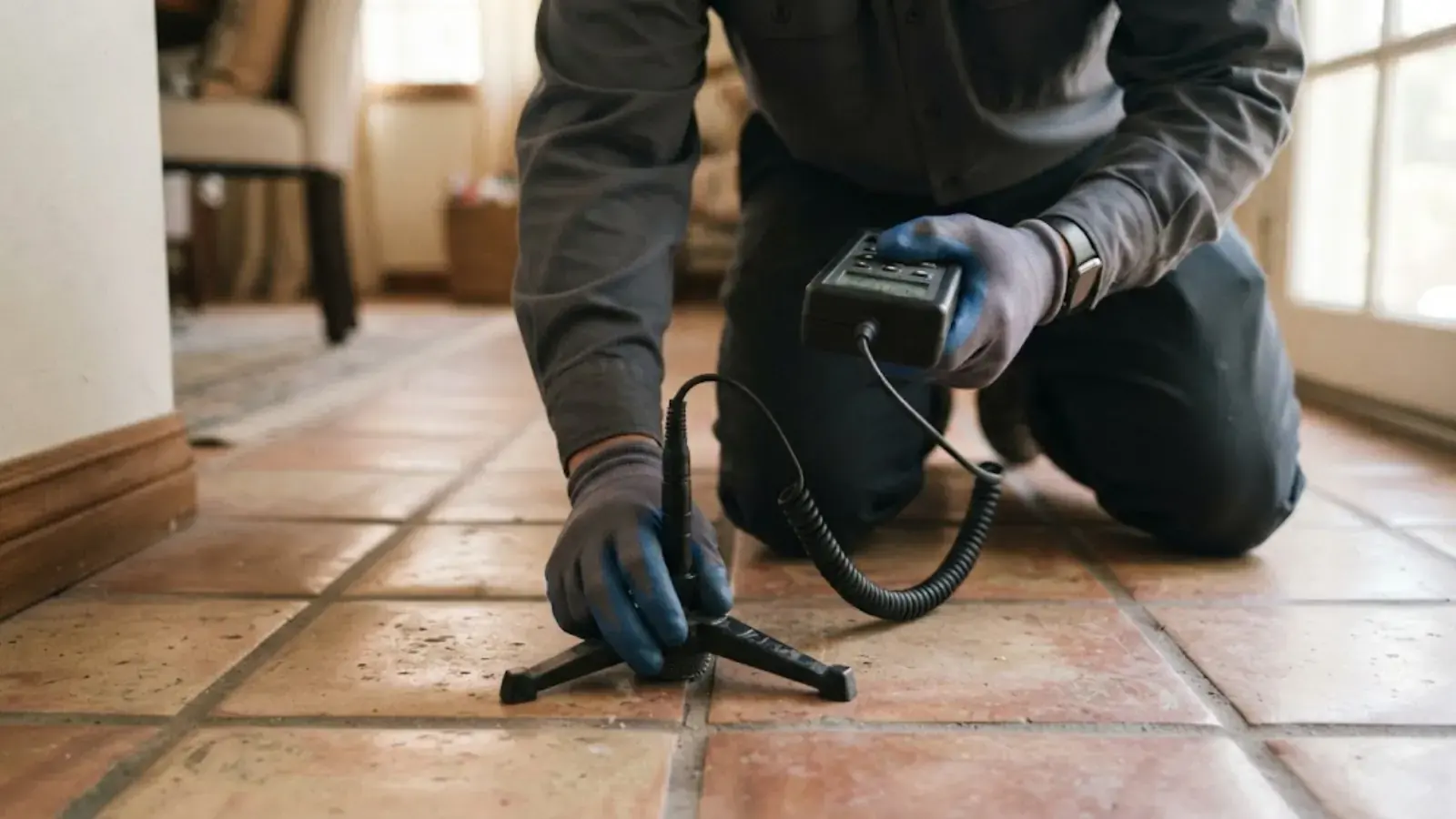
A plumber can find where a leak starts and write down what was found, so you can bring that record to management. Our leak detection service uses moisture readings and listening equipment, which keeps any opening in the wall small.
The first minutes of a leak in your unit
These steps apply to any condominium unit. They are general guidance, not a substitute for your building's own emergency procedure.
Close the unit shutoff
Find the valve that serves your unit and close it. If it will not turn, do not force it. Ask the building engineer or management to close the riser valve.
Protect the room
Move electronics and furniture out of the wet area. If water is near outlets, keep clear of them and switch off the breaker only if you can reach the panel without standing in water.
Tell the building
Notify management and, if water is reaching a neighbor, the unit below. Prompt notice limits damage and helps with any insurance claim.
Document and call
Photograph the damage with the date, then call a plumber. Gas smell is different, so leave and call 911 from outside first.
Calls that fit condominium living
These are general situations for condominium units, not claims about how often they happen on Ocean Drive.
- A water heater leaking in a closetTanks in utility closets can damage floors and the unit below. See water heater replacement and water heater repair.
- A stain on the ceilingWater from above often shows up on your ceiling first. A plumber can help find whether it is a pipe, a fixture or something else.
- Slow drains in more than one unitThis can point to a shared stack. Report it to management and ask about line cleaning or a camera inspection.
- A toilet that runs or rocksA worn part or loose base seal can leak down to the floor below. See toilet repair.
Building inspections and plumbing: do not assume overlap
The city runs a Building Safety Inspection Program for older buildings. The city's program page describes structural and electrical inspections for buildings that are 40 years or older and every ten years after. Its description does not mention plumbing.
So a building that has passed those inspections has not necessarily had its plumbing reviewed. If your association has not had pipes or risers assessed, that is a question to raise with management, and a plumber can scope what an assessment would involve.
Ocean Drive on the map
Ocean Drive runs along the beach side of Hallandale Beach. The map is centered on the Ocean Drive corridor near the city's beach area.
Before you hire
Look up any plumbing contractor on the Florida Department of Business and Professional Regulation's free license search, and ask for the price before work begins. Many associations also have rules about contractor access and insurance, so ask management what a visiting plumber must provide.
Questions homeowners ask
It depends on where the leak starts and on your building's governing documents. A plumber can locate the source and write down what was found, which gives you and your association a clear starting point.
Yes, in most buildings. Water can reach neighboring units and shared areas quickly, and prompt notice limits damage. Check your building's rules for the correct process.
The city's description of the program mentions structural and electrical inspections for buildings 40 years or older. It does not mention plumbing, so ask your association whether pipes and risers have been reviewed separately.
The Florida Department of Business and Professional Regulation provides a free license search. Look up the contractor by name or license number and confirm the license is active before work begins.
Sources and official references
The governing standard for plumbing work in Florida is the Florida Building Code, Plumbing (8th Edition, 2023), with the 9th Edition scheduled to take effect December 31, 2026. This page is general information and not a code interpretation, so confirm requirements with the city Building Division.
- City of Hallandale Beach, Hallandale Through the Years
- City of Hallandale Beach, Comprehensive Plan Element 1
- City of Hallandale Beach, Building Safety Inspection Program
- City of Hallandale Beach Utilities Division
- Florida DBPR, verify a contractor license
- Florida Building Commission, current Florida Building Code editions